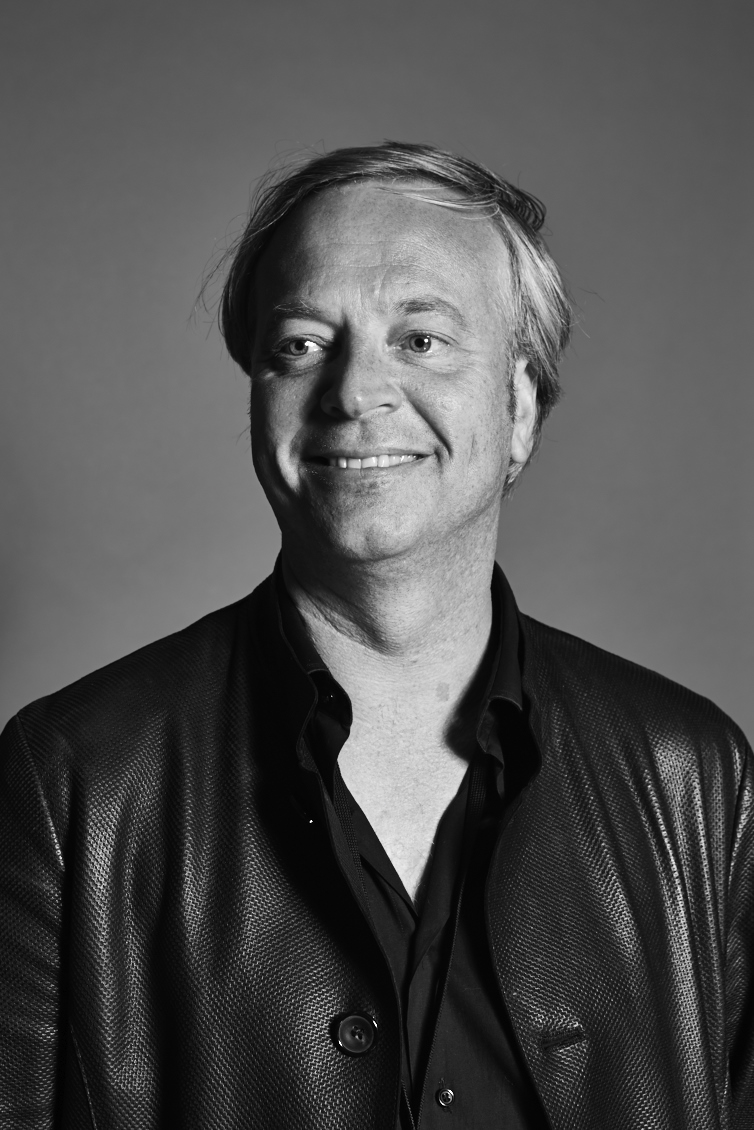
Professor Roel Vertegaal at DGP

Professor Roel Vertegaal is presenting a talk this Friday, October 24th at 11:00 am in the Bahen Centre, Room BA1210.

Designing everyday computational things

Abstract
In his book The Psychology of Everyday Things, Donald Norman outlined a world of things around us that are poorly designed because their designers did not apply psychology to the design process. The idea that psychologists can answer questions about design, through a user-centered design process, is a thesis that has guided our field for several decades. However, if we examine what the worlds top industrial designers, such as Yves Béhar, Jonathan Ive, Karim Rashid, and Philippe Starck, actually do, it becomes clear that they work quite differently. To them, thinking about function is like thinking intuitively about three-dimensional shapes. Interaction design is at the dawn of a new age: Flexible Organic Light Emitting Diodes (FOLEDs) and Flexible Electrophoretic Ink (E Ink) present a third revolution in display technologies that will greatly alter the way computer interfaces are designed. Instead of being constrained to flat surfaces, we will have the ability to shrink-wrap displays around any three-dimensional object, and thus, potentially, every everyday thing. You will order your morning coffee through a display on the skin of your beverage container and your newspaper will be displayed on a flexible paper computer that can be folded into your pocket. Each “thing” will ease mental load by serving only one physical function. As opposed to most software, computational things live in real reality. This means they will have to be designed by industrial designers that can intuit how physical shape and materiality trigger deeply haptic, emotive and immersive connections between real-world objects of use and our bodies, souls and minds.

RoelVertegaal  Bio
Roel Vertegaal is a Dutch-Canadian interaction designer, scientist, musician and entrepreneur working in the area of Human-Computer Interaction. He is the director of the Human Media Lab and Professor at Queen’s University’s School of Computing. He is best known for his pioneering work on flexible and paper computers, with systems such as PaperWindows (2004), PaperPhone (2010) and PaperTab (2012). He is known for inventing ubiquitous eye input, such as Samsung’s Smart Pause and Smart Scroll technologies. He is also a co-founder of Mark One, and co-inventor of Vessyl, the smart beverage container.

Dr. David Flatla Presents a Talk

Dr. David Flatla is presenting a talk at DGP on October 23rd, 2014 at 11:30 am. The talk s being hosted in the DGP Seminar room, BA5187.

Title: Colour Identification through Sensory and Sub-Sensory Substitution

Abstract: Colour vision is one of those fundamental elements of day-to-day life; it helps us coordinate our clothing, prepare food, read charts, decorate our homes, keep safe, and enjoy nature and the arts. However, people with impaired colour vision (ICV) often cannot discriminate between colours that everyone else can, making these day-to-day activities difficult. In an attempt to help people with ICV, recolouring (or Daltonization) tools have been developed that remap problem colours to more distinguishable ones for people with ICV, thereby enhancing colour differentiability.

However, in spite of almost 20 years of recolouring research, empirical results showing that recolouring actually helps people with ICV are very rare. One potential reason for this is that recolouring often destroys the subtle colour cues that people with ICV rely on. A second (and indirect) reason is that recolouring is a captivating challenge for computing – the problem (dimensionality reduction) is accessible, solutions are easy to build but optimality is elusive, and the algorithms have a number of challenging user-satisfaction constraints (e.g., speed, temporal invariance).

“In this talk, I will present my recent work on the next generation of tools for helping people with ICV that preserve the subtle colour cues relied on by people with ICV, and (hopefully) represent a new captivating computing challenge. These tools look to address the fundamental problem of ICV – reduced colour perception – by enabling users to correctly identify colours in their environment by mapping colour information to other aspects of vision (sub-sensory substitution) or to hearing (sensory substitution). I will describe four prototype tools, present early user study results, and discuss future directions for this work.”

– Dr. David Flatla

Bio:
Dr. David Flatla is a Lecturer and Dundee Fellow in the School of Computing at the University of Dundee. He received his PhD in Computer Science from the University of Saskatchewan (Canada), where he was supervised by Carl Gutwin. David’s research explores the intersection of human colour perception and digital interfaces, where he models the unique abilities of individual users and adapts interfaces accordingly. His current research focusses on re-evaluating previous assistive technologies designed to support people with impaired colour vision to identify gaps where more effective assistance can be provided. David’s previous work has received Best Paper awards from CHI and ASSETS, and he received a Canadian Governor General’s Gold Medal for his PhD work.

UIST 2014

DGP Faculty and Students will be presenting their papers at UIST 2014 during the week of October 5th to October 8th in Honolulu, Hawaii. Congratulations!

Speaking at Yahoo! Research

Daniel Wigdor will be giving an invited talk at Yahoo! Research in Sunnyvale on August 8 entitled Vertical Software Design & Cross-Device Software Tools.

Capstone Course Petitions

Students interested in taking Daniel Wigdor’s capstone design course (CSC490): between August 1 and August 31, send Daniel Wigdor an email with the subject line capstone petition, with the following additional details:
Your transcript
Your program of study
A 1-paragraph description of why you would like to take the course, including how it fits-in to your career goals
A 1-paragraph description of a position you have held in which you have demonstrated an ability to work effectively without direct supervision